
Introduction:
The first article in this series concluded that there is a need for a translation phase as part of a strategy development & implementation process. One of the results of the translation phase is a clear agenda for management to steer the process going forward and to realise impact, the so-called strategic roadmap. This is a very useful tool to constantly guide and compare itself versus the chosen strategy going forward.
“The strategic roadmap”
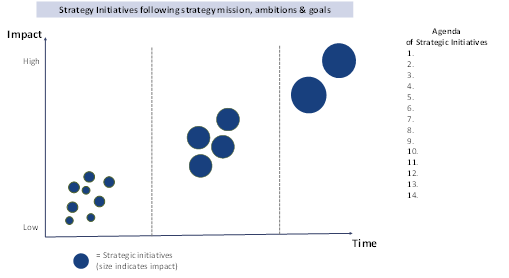
The strategic roadmap provides an overview of which activities the organization aims to develop over a certain time horizon, to reach the mission and ambition following the identified strategy. In itself the strategic roadmap is not a novelty but by defining the y-axis as impact there is an opportunity to include crucial current market dynamics. Impact can be interpreted in various manners for which selection criteria can be defined. The obvious ones are revenues, profit, clients, market share however, I would like to share two dimensions which can add significant value and therefore should be included into the strategic roadmap:
- Innovation
- Sustainability
Ad 1: Innovation
While identifying strategic initiatives, it is important to consider the innovative character of the potential initiatives. Aim is to influence the competitive & differentiating position of the organization.
An often-applied framework of innovation is the three-horizon framework (Steve Coley, McKinsey, 2009). The goal is that the various strategic initiatives are organized along every horizon and are being implemented simultaneously (not consecutive). By doing so, different levels of innovation will be initiated and value will be created at diversified moments.
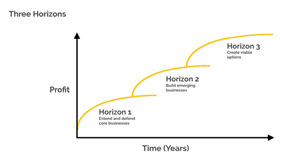
Horizon 1: Extend & defend current business
“Play for performance”: 12 months horizon, focus on market share, revenues & margins. Improvement & efficiency-oriented initiatives. *
Horizon 2: Build emerging business
“Play for power”: 12-30 months horizon, focus on segment share, build new material growth business, incremental innovation. *
Horizon 3: Create viable options
“Play for options”: 30-72 months horizon, focus on next big thing, Create options for future business, disruptive innovation. *
The aim is to create a balanced mix of innovative initiatives to be well positioned for the future.
Ad 2: Sustainability
The importance of sustainable development has increased enormously over the years and will continue to do so in the coming years. Therefore, this topic is a key element to consider when developing the strategic roadmap. The final goal is to include the topic integrally when developing strategic initiatives.
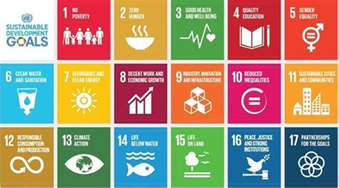
A possible approach is to develop initiatives which can be compared & organized in line with the SDG (Sustainable Development Goals) framework. ** Once completed, the initiatives & SDG goal(s) can be mapped onto the strategic roadmap to make clearly visible which initiatives create a sustainable impact.
Closing remarks:
Key to this process is to be agile: regularly revisit the roadmap, compare versus the external & internal situation and adjust the roadmap when deemed necessary.
The above-mentioned elements are not an exhaustive list. They are meant as suggestions which can significantly improve the process of managing the implementation of a strategy and to realise value.
Looking forward to discuss your thoughts & ideas.
T. Lens